
This update reflects market and geopolitical conditions at the time of writing. Because global developments are constantly unfolding, conditions may change after publication.
The Ongoing Landscape:
The Middle East Conflict & Global Markets
While initial market reactions are often driven by immediate headlines, markets have been responding to the conflict’s broader economic implications.
Summary of Recent Developments
Initially, the conflict primarily disrupted the transport of energy out of the Middle East, causing upward pressure on oil and natural gas prices, though physical facilities remained largely intact. However, the situation has evolved:
- Impact on Production: More recently, some production facilities in the Middle East have sustained damage. These will take a longer period of time to repair and bring online again, compounding the continued disruption in transport.
- Conflict Duration: While the initial thought was that this would be short-lived, markets are beginning to consider the possibility of a longer-lasting conflict.
What the Markets are Digesting
We are closely monitoring how these geopolitical developments translate into broader economic trends, specifically regarding inflation and interest rates:
- The Energy-Inflation Link: The move higher in energy prices is potentially influencing inflation and consumer spending patterns. There is a growing focus on whether higher energy prices will cause consumers to spend less in other discretionary areas.
- Central Bank Pivot: Prior to the conflict, markets anticipated lower interest rates through this year. Due to inflation concerns, central banks globally have paused rate reductions and have begun mentioning the possibility of increasing rates in the future should energy prices remain elevated. This has created volatility in both bond markets (bond prices move lower when interest rates move higher) as well as equity markets.
- Profitability and Fiscal Outlook: Markets are currently digesting how increased input costs may impact company profitability. Additionally, we are monitoring the U.S. fiscal outlook as increased defense spending may impact the national deficit.
Looking Ahead
During periods of uncertainty, the most effective strategy is a disciplined one focused on the long term.
- The Bigger Picture: Making near-term decisions based on emotion has historically not led to better outcomes. Markets have historically moved higher over time despite near-term geopolitical conflicts.
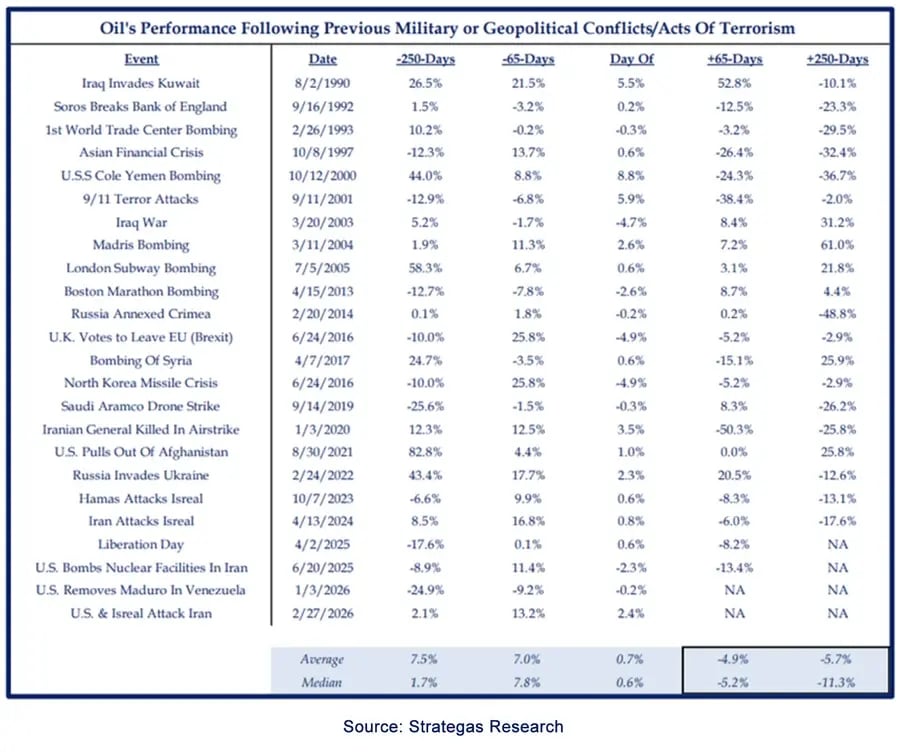
- What History Tells Us: Let’s take a look at the chart below. Historically, oil prices are often lower 12 months following geopolitical events that initially caused a price spike.
- The Power of Diversification: A diversified portfolio includes assets that perform well in a variety of conditions, from growth and inflation to volatility. This remains a powerful approach to managing both near-term and long-term market swings.
- Disciplined Focus: Staying focused on your long-term goals with a disciplined financial plan is a strong complement to a diversified portfolio. For many, pockets of volatility offer attractive opportunities to allocate capital to areas of market dislocation.
It’s important to remember that your financial plan is designed to weather periods of uncertainty just like this. Please reach out if you have any questions or simply want to talk through the current headlines.